



Resources
Why Plastic
Without realising it, wherever we go we come across plastic. From waking up in the morning when the alarm on your phone rings and you look at the time on its screen, you are already holding plastic. Then when you walk to the bathroom to shower & brush your teeth, the water scoop, bucket, mug, shampoo bottle, even the toothbrush and toothpaste tube we use are all made of plastic. And so on…
As these examples show, plastic has made a significant contribution to progress in our daily lives. With plastic, innovative people have been able to make many tools and devices that help everyday life.
Some news reports say that plastic pollutes the environment. The answer is yes and no. But before we explain further, let’s imagine if today we went back to the old days before plastic was invented.
No phone to wake us up in the morning. Coconut shells as water scoops, and water stored in clay jars. And can you imagine chewing betel leaves to clean our teeth? Yes, this is how our ancestors used to live. Are we ready to go back to those times today? I think most of us, myself included, are not ready to live without plastic nowadays.
Back to the original topic of plastic polluting the environment. The answer is Yes: plastic will pollute the environment if we throw plastic waste carelessly until rivers are covered in plastic waste & eventually cause floods. Or plastic carried by rivers until it pollutes the open sea & endangers & kills marine life.
The answer is No: plastic will not pollute the environment if plastic waste is managed properly and sorted by type so it can be recycled, or if certain non-recyclable plastics can be used as fuel for power plants. For example, why is it that in developed countries such as in Europe, Japan, America, etc., we almost never hear news of rivers clogged with waste or see streets polluted with plastic waste?
With today’s technological progress, scientists have even found ways to turn plastic waste into fuel for vehicles or use it for road asphalt. For how it’s done or more information, I suggest you research further via Google.
Plastic & Product Knowledge
First of all, do you know what plastic is made from? Psst.. if you are a job applicant joining us, we will tell you the answer. Or option 2: check Google for the answer 🙂
The main function of plastic is as a place / container for storing goods that protects the goods inside from the outside air. Because there are so many variants & types of plastic, on this site we will briefly explain the types of plastic & Plastic Bags that can easily be found in plastics stores / supermarkets / online shops, for your goods / product / food wrapping needs.
The type of plastic bag commonly used & easily found on the market is mono layer plastic (plastic made using only 1 type of plastic raw material). The advantage of mono layer plastic is that it can be bought in small quantities & is relatively affordable for everyone. Mono layer plastic is more environmentally friendly because used plastic of this type can be recycled relatively easily. The weakness of mono layer plastic is that when used to store food, the food inside cannot be kept for years compared with multi layer plastic.
The other type of plastic bag is multi layer plastic (plastic made using several types of plastic raw material). This type of plastic will not be found on the market, because every order must be in very large quantities & generally only large industries order it. Multi layer plastic bags are generally used for specific applications such as: infusion bags in hospitals (using PP, PVC, PE, Polyesther and other plastic raw materials so that the infusion fluid stays completely sterile and protected from sunlight) or 3 in 1 coffee sachet packaging lined with aluminium, etc. The advantage of multi layer plastic is that its characteristics can be combined as required. However, multi layer plastic has major weaknesses. One is that it is less environmentally friendly because it is very hard to recycle (because of the mix of different plastics & other materials inside it). The second is that it costs far more than mono layer bags & orders must be in very large quantities.
Below are the Plastic Bags you can find on the market:
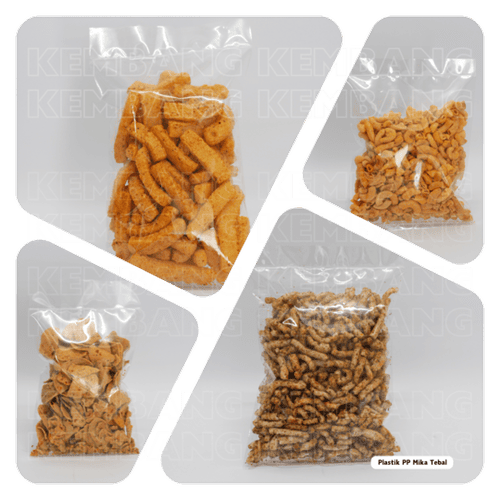
1. PP (Polypropylene) plastic bags / Transparent plastic bags
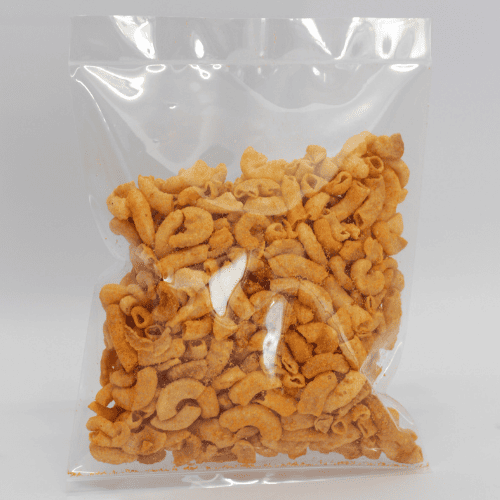
The plastic bags we produce are commonly used to show / display / highlight the goods inside the bag. They are generally used for everyday items such as: book covers, laundry, bread, traditional cakes, snacks, clothing, etc.
- Characteristics:
- Transparent, slippery, slightly stiff, heat resistant, can be stretched a little
- Advantages:
- PP plastic bags are relatively cheaper than other types of plastic bags. Our PP plastic uses 100% virgin grade & is food safe
- Weaknesses:
- Because of its chemical characteristics, PP plastic is not well suited to making liquid ice blocks & storing bulk cooking oil. Unknown to most people, some competitors mix their raw materials with recycled raw materials.
- Variants:
- PP Roll, PP Bag, PP Zip

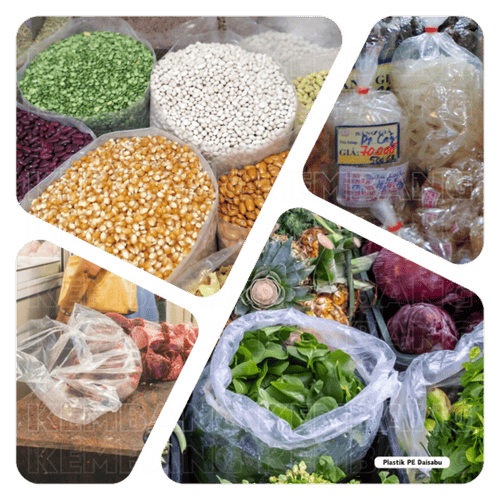
2. PE / LLDPE (Linear Low Density Polyethylene) plastic bags
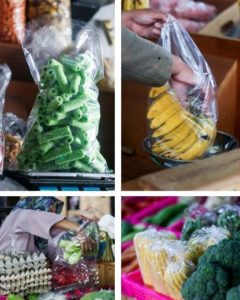
This type of bag is somewhat opaque and is commonly used to wrap goods whose contents don’t need to be seen but must be oil resistant.
- Characteristics:
- Opaque, very slippery, soft, can be pulled / stretched until very elastic
- Advantages:
- Because the plastic is tougher, PE plastic is commonly used for bulk cooking oil, ice lollies, cendol drinks, rolled fabric wrapping, etc.
- Weaknesses:
- Besides being opaque, PE manufacturers generally mix virgin grade raw materials with recycled raw materials when making these bags (such as for trash bags / garbage bags) so they can be sold cheaply.
To the naked eye it is quite hard to tell products made from virgin grade apart from those mixed with recycled raw materials. - Variants:
- PE Bag, PE Roll, Jumbo garbage bags, PE clip (for medicine in pharmacies), PE cor (plastic laid under poured road concrete), etc

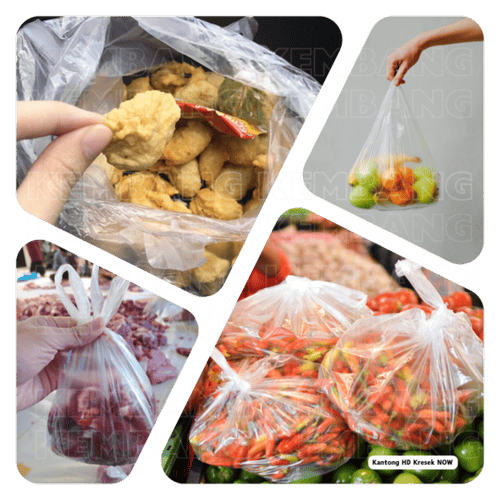
3. HD / HDPE (High Density Polyethylene) plastic bags / Heat resistant HD / Thin HD / Kresek Bags
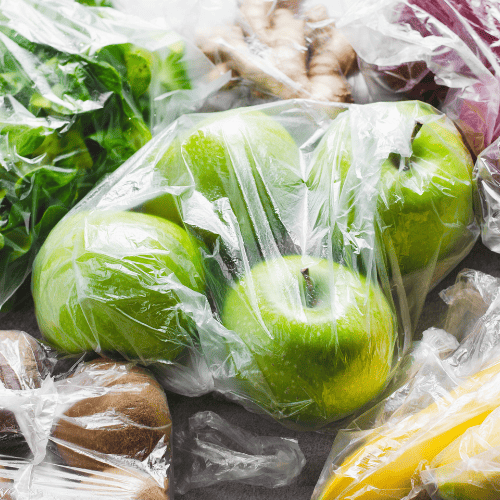
This type of bag is similar to PE, but is commonly used by restaurants / food vendors to wrap hot soupy food such as meatball noodles, chicken broth, soup, fruit bags in supermarkets, or as kresek carrier bags.
- Characteristics:
- Opaque, slightly stiff & not too slippery
- Advantages:
- Relatively cheap & there are a great many types / applications of rolls or bags that use this variant
- Weaknesses:
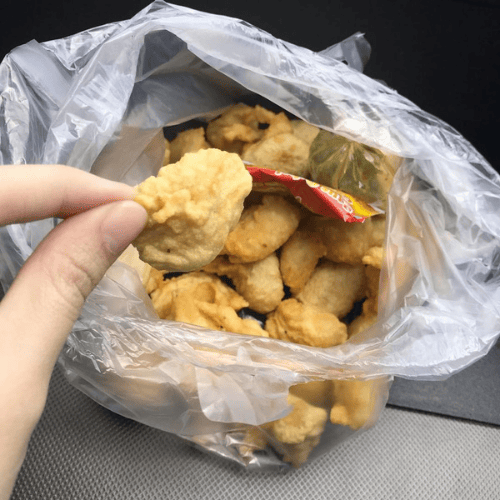
- Opaque, and like LLDPE, some HDPE bag manufacturers mix virgin grade raw materials with recycled raw materials. If you want to use HD bags to wrap food with broth, you must be selective in choosing the plastic manufacturer. Especially for kresek bags, it is strongly not recommended to use them directly to wrap oily food such as fried snacks.
- Variants:
- Heat resistant HD (thick HD), thin HD, HD Roll (like those used for fruit in supermarkets), HD Kresek

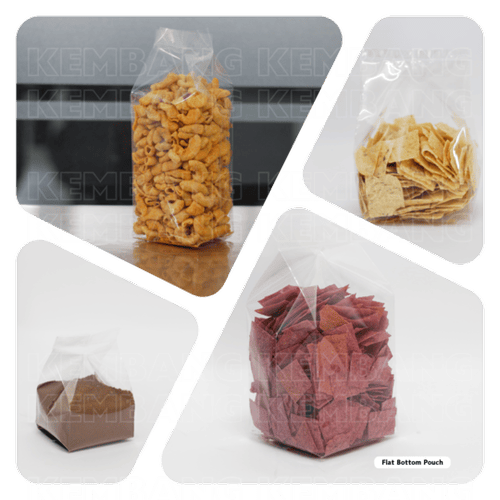
4. BOPP (Biaxially Oriented Polypropylene) plastic bags / OPP bags
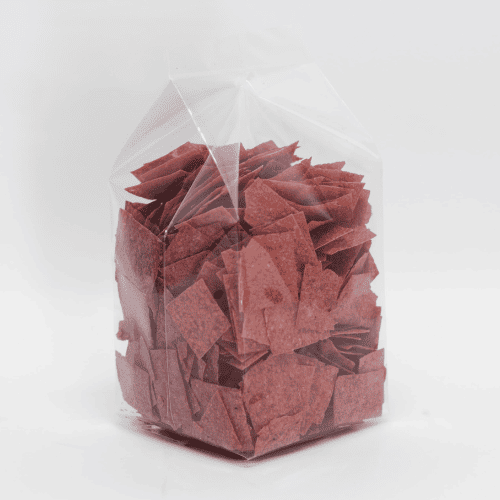
This bag is similar to PP and is commonly used to show / highlight the goods inside the bag. It is commonly used for outer wrapping of CDs / DVDs, invitation cards, certain foods, shirts, adhesive tape, etc
- Characteristics:
- Very clear, very stiff, tears easily at the edges, does not stretch.
- Advantages:
- If you have enough budget to display your product and your product is not too heavy, BOPP plastic bags are an alternative to regular PP bags.
- Weaknesses:
- Tears easily at the edges, sold at a relatively higher price (sold per sheet) than regular PP bag variants, relatively limited sizes, and cannot hold heavy goods because it tears easily at the edges.
- Variants:
- Bags with adhesive at the end, such as for invitation cards or DVD wrapping, adhesive tape, etc

5. Non-Woven Plastic Bags
This bag feels like fabric to the touch. Non woven plastic on the market is commonly used for promoting certain products / services or as gift and souvenir bags. This plastic is generally used in the manufacture of disposable masks, nappies & sanitary pads.
- Characteristics:
- Fabric-like, not transparent, not airtight & absorbs water
- Advantages:
- Because this type of plastic is used differently from the previous 4 types, we cannot describe the advantages of this bag.
- Weaknesses:
- Not waterproof, not airtight, & sold at a relatively higher price (per sheet) than other types of plastic bags.
- Variants:
- Non woven plastic bags, masks, nappies, etc
